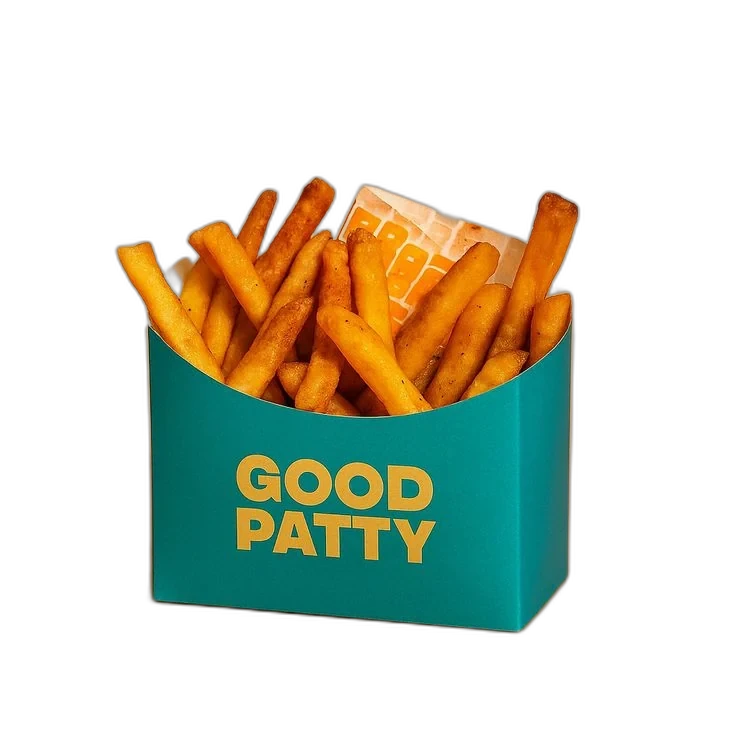
Food packaging is the one category where getting the material wrong is not just a branding problem. Board, coating, adhesive, and ink all sit against something a person will eat, and the rules that govern them are stricter than most first-time food brands expect.
This is an overview of how food-contact packaging works in practice and what to ask for when you order. It is written to help you have a better conversation with your supplier, not to replace regulatory or legal advice for your specific product and market.
Key takeaways
- Food grade is not one certificate — it means every component is approved for its specific contact type.
- Direct contact requirements are stricter than indirect, where a sealed inner layer sits between food and board.
- Inks and coatings must be selected for food contact; standard commercial inks are not automatically suitable.
- Grease and moisture resistance is a functional spec, and PFAS-based treatments are increasingly restricted.
- Ask for written documentation for board, coating, ink, and adhesive — and keep it on file.
What food grade actually means
There is no single stamp that makes packaging food safe. What counts is whether each individual component is suitable for the way it will be used — the food type, the contact duration, and the temperature involved — and the requirements for that differ from market to market.
That means a supplier saying the box is food grade is not a complete answer. The useful question is narrower: is this specific board, with this specific coating, printed with these specific inks and assembled with this specific adhesive, suitable for my food, at my temperature, for my contact time?
Direct vs indirect contact
This distinction determines most of your material decisions, and it is the first thing to establish.
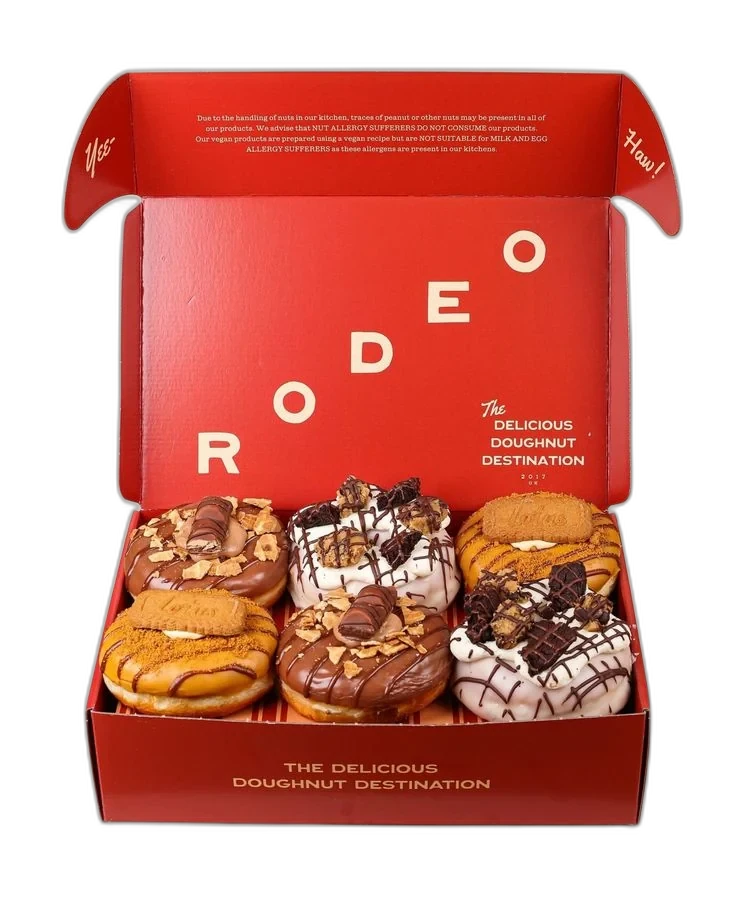
Direct contact means the food touches the packaging: a bakery box holding an unwrapped pastry, a paper tray under fries, a cup holding a drink. Indirect contact means something sealed sits between the food and your printed board — a foil pouch inside a carton, or a wrapped chocolate bar inside a sleeve.
| Direct contact | Indirect contact | |
|---|---|---|
| Example | Bakery box, fry tray, coffee cup | Carton around a sealed pouch |
| Requirements | Strictest — board, coating, ink, adhesive all cleared for contact | Looser on the outer carton, but migration still matters |
| Common approach | Food-grade virgin fibre with an approved barrier | Standard carton plus a compliant sealed inner layer |
Why recycled fibre needs care
Recycled content is usually a sustainability positive, but for direct food contact it needs scrutiny. Recycled paper streams can carry residues from their previous life, including mineral oil components originating from printing inks in recovered newsprint.
The common solutions are either virgin fibre for the food-contact layer, or a functional barrier that prevents migration from the board into the food. If you want recycled content and direct contact, that barrier is the part to specify explicitly.
Inks, coatings, and adhesives
Every material in the stack matters, not just the board. Inks, varnishes, laminates, and glue can all migrate under the right conditions of heat, fat, and time.
- Inks must be selected for food-contact use; standard commercial inks are not automatically appropriate.
- Low-migration ink systems are typically specified where print sits close to food.
- Keep print off the food-contact surface wherever the design allows — it is the simplest risk reduction there is.
- Adhesives and coatings need their own documentation, not just the board.
Grease and moisture barriers
Beyond safety, food packaging has to actually work. Grease striking through a bakery box or a burger carton within minutes is a functional failure customers notice immediately.
Grease resistance is commonly assessed with a kit rating, where a higher number indicates greater resistance to oil penetration. Tell your supplier what you are packing — a dry biscuit, a buttery pastry, and a hot oily burger need very different specifications.
- Dry goods — often need little or no barrier
- Baked goods with butter or oil — need a defined grease barrier
- Hot, wet, or oily foods — need both grease and moisture resistance
- Frozen or chilled — confirm the coating performs at that temperature
Temperature changes everything
A material cleared for cold, dry contact is not automatically suitable hot. Heat accelerates migration and can soften coatings and adhesives, so the same board that is fine around a chilled sandwich may not be appropriate for a hot pie.
Be specific with your supplier about the maximum temperature the packaging will see — including whether it will be microwaved, ovenable, or simply filled warm.
Labelling is a separate obligation
Material compliance and label compliance are two different projects. Your printed packaging usually also has to carry mandatory information, and the exact requirements depend on your product and market.
Typically that includes the product identity, an ingredient list, allergen information, net quantity, and the name and address of the responsible business. Nutrition information and country-specific formats are common too, so confirm the rules for every market you sell into before finalising artwork.
What to ask your supplier for
Put the request in writing and keep the responses on file. If a customer, retailer, or auditor ever asks, this is the paperwork that answers them.
- Confirmation of the contact type your packaging is approved for — direct or indirect.
- Documentation covering board, coating, ink, and adhesive rather than the board alone.
- The grease and moisture barrier specification, with confirmation of PFAS status.
- The maximum service temperature the packaging is rated for.
- A physical sample tested with your actual product, at your actual temperature, for a realistic hold time.
Frequently asked questions
It means every component — board, coating, ink, and adhesive — is approved for the specific way it contacts food, including the food type, contact duration, and temperature. It is not a single universal certificate, which is why you should ask for documentation per component.
Want this reviewed on your own project?
Send us your product details and our team will recommend a construction and stock, supply a free dieline and 3D mockup, and price two or three options — within 24 hours.